
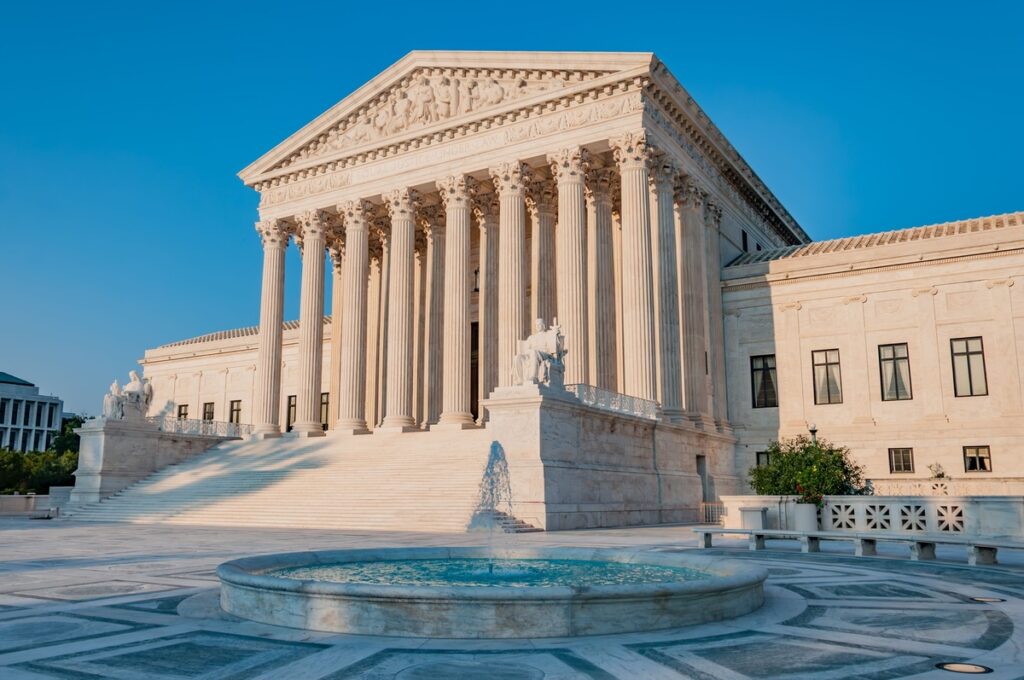
The recent decision by the Supreme Court of the United States on executive tariff authority is more than a policy update — it’s a strategic turning point for importers, retailers, and global brands operating in 2026.
For years, tariffs have reshaped sourcing models, inflated landed costs, pressured margins, and forced companies to make defensive supply chain decisions. Now, with new limits placed on certain executive tariff powers, the environment is shifting again.
This is not simply legal news.
It is an operational moment — and the companies that respond strategically will gain measurable competitive advantage.
At Bergen Logistics, we see this ruling as a catalyst: an opportunity to optimize cost structures, re-evaluate inventory strategy, and strengthen supply chain resilience through expert 3PL execution powered by CloudX Systems.
Why the 2026 Tariff Ruling Matters to Importers
The Court’s decision restricts the scope of certain broad tariff authorities that have been used to impose sweeping duties on imported goods. While implementation details will continue to unfold, the immediate implications include:
- Reassessment of duty structures
- Greater regulatory clarity
- Potential sourcing realignment
- Repositioning of U.S. inventory
For importers, tariffs are not abstract policy. They directly affect:
- Landed cost per SKU
- Pricing strategy and retail competitiveness
- Cash flow timing
- Margin protection
- Inventory planning decisions
Even positive tariff adjustments can create short-term complexity. Goods in transit, bonded inventory, existing purchase orders, and multi-channel commitments all require precise recalibration.
The real risk is not tariff change. The real risk is reacting too slowly.
Tariffs Don’t Exist in Isolation. They Intersect with Everything
The 2026 trade environment is layered. Tariff shifts intersect with:
- Freight rate volatility
- Nearshoring and supplier diversification
- E-commerce acceleration
- Retail inventory compression
- Increased compliance scrutiny
That means brands need more than warehouse space.
They need:
- Real-time inventory intelligence
- Duty deferral strategies
- Omnichannel flexibility
- Compliance-aware operations
- Cash-flow-optimized storage models
This is where a strategic 3PL partner becomes indispensable.
Bonded Warehousing: Turning Tariff Volatility into Financial Flexibility
When tariffs fluctuate, timing becomes leverage.
Bergen Logistics operates fully CBP-compliant bonded warehouse solutions designed to give importers control during regulatory transitions.
Bonded warehousing allows companies to:
- Defer duty payments until goods enter U.S. commerce
- Re-export goods without paying U.S. duties
- Reduce immediate cash outlay
- Strategically time inventory release
In uncertain tariff environments, that flexibility can materially impact working capital.
Consider this: if duty rates are subject to change or regulatory reinterpretation, paying immediately may lock in unnecessary cost exposure.
Bonded storage creates optionality — and optionality protects margins.
For fashion brands, footwear importers, electronics distributors, and consumer goods companies, this is not theoretical. It is a financial control mechanism.
CloudX Systems: Data Is the Real Competitive Advantage
In trade transitions, data wins.
Bergen Logistics’ proprietary CloudX Systems warehouse management platform gives clients:
- Real-time inventory tracking
- SKU-level visibility across facilities
- Integrated reporting dashboards
- ERP and e-commerce integrations
- Accurate landed cost modeling support
When tariff adjustments require rapid analysis, you cannot rely on outdated spreadsheets.
You need live data.
CloudX Systems turns inventory from a static asset into a strategic decision tool.
Brands can:
- Evaluate duty exposure by SKU
- Model alternate sourcing scenarios
- Reallocate inventory between wholesale and DTC
- Accelerate fulfillment to protect pricing
Visibility is no longer a luxury — it is a requirement for margin control in 2026.
Omnichannel Fulfillment: Flexibility Is the New Stability
Tariff changes often trigger inventory reassessment:
- Should we accelerate sell-through?
- Should we delay release?
- Should we prioritize DTC over wholesale?
- Should we rebalance marketplace exposure?
Bergen Logistics specializes in omnichannel fulfillment solutions supporting:
- Wholesale distribution
- Direct-to-consumer (DTC)
- Marketplace fulfillment
- Retail compliance programs
- Kitting, subscription, and specialty packaging
When trade conditions shift, the ability to pivot between channels without operational disruption is critical.
Operational rigidity amplifies tariff risk. Operational flexibility absorbs it.
Our clients maintain brand consistency, compliance accuracy, and customer experience — even when regulatory conditions evolve.
Freight, Customs & Compliance: Precision Prevents Disruption
Tariff rulings affect more than duty rates. They influence:
- Harmonized tariff classifications
- Documentation requirements
- Customs audits
- Import/export compliance reviews
Bergen Logistics works closely with freight partners and customs specialists to ensure:
- Documentation alignment
- Classification accuracy
- Routing optimization
- Risk mitigation
Because even when tariffs decrease, compliance scrutiny often increases.
Regulatory clarity does not eliminate regulatory responsibility.
The Strategic Opportunity Hidden in Regulatory Change
It is tempting to view tariff shifts as instability.
But strategic operators see leverage.
Forward-thinking companies are already using this moment to:
- Renegotiate supplier agreements
- Diversify sourcing geographies
- Improve landed cost forecasting
- Reposition U.S. distribution networks
- Strengthen 3PL partnerships
If tariffs ease on certain goods, brands that act quickly can recover margin faster than competitors.
If tariffs tighten elsewhere, prepared companies can mitigate impact through bonded storage and optimized release timing.
The difference between disruption and advantage is preparation.
Bergen Logistics: A Market Leader in Strategic 3PL Execution
Bergen Logistics has built its reputation as a leader in omnichannel 3PL solutions by combining:
- Operational precision
- Technology-enabled transparency
- Bonded warehouse expertise
- Regulatory-aware infrastructure
- Scalable fulfillment networks
Our CloudX Systems platform provides the intelligence brands need to make confident decisions.
Our bonded facilities provide the financial flexibility needed during tariff transitions.
Our fulfillment execution protects customer experience, regardless of regulatory shifts.
We do not simply store inventory.
We optimize supply chain performance in dynamic trade environments.
For importers navigating the 2026 tariff landscape, that distinction matters.
What Importers Should Do Now
If your organization imports into the United States — or plans to expand — this is the moment to act decisively.
Immediate action steps:
- Conduct SKU-level tariff exposure analysis
- Evaluate bonded warehousing opportunities
- Recalculate landed cost models
- Assess omnichannel inventory allocation
- Audit your 3PL’s visibility and compliance capabilities
Waiting for “complete clarity” is not a strategy.
Clarity favors those already prepared.
Stability Comes from Strategy — Not Regulation
The Supreme Court tariff ruling marks a pivotal moment in U.S. trade policy.
But one principle remains constant:
Operational excellence outperforms regulatory volatility.
At Bergen Logistics, we don’t react to change — we architect supply chain systems that absorb it.
If you want to protect margins, strengthen cash flow, and build resilience in 2026, the time to evaluate your 3PL strategy is now.
Ready to Reassess Your Tariff Strategy?
Schedule a strategic consultation with Bergen Logistics today.
Let’s analyze your tariff exposure, explore bonded warehouse solutions, and optimize your omnichannel fulfillment strategy before market shifts accelerate.
Regulatory clarity is here. Competitive advantage belongs to those who move first.